In short
Flavor kombucha at bottling, after the first fermentation, with about a tablespoon of fruit or 30 to 60 ml of juice per 500 ml bottle. Sweet ingredients make fizz on their own; herbs, spices and citrus need a little fruit or half a teaspoon of sugar alongside. Ginger is the classic because it does both: flavor and a fast, lively carbonation.
Start with one ingredient, then pairs. Strain before drinking, refrigerate when the fizz is right, and write down what you used.
The three rules
First, amounts: 5 to 10 percent juice by volume, or one to two tablespoons of fruit per 500 ml. More is not better; it just makes the bottle sweeter, cloudier and more likely to gush. Second, sugar is what makes bubbles: sweet fruit and juice carbonate by themselves, while herbs, spices and citrus need a partner with sugar in it. Third, flavor at bottling, never in the brewing jar. Fruit acids, oils and wild yeasts unbalance the culture and cling to the SCOBY; the second fermentation is where they belong.
Ginger, the classic
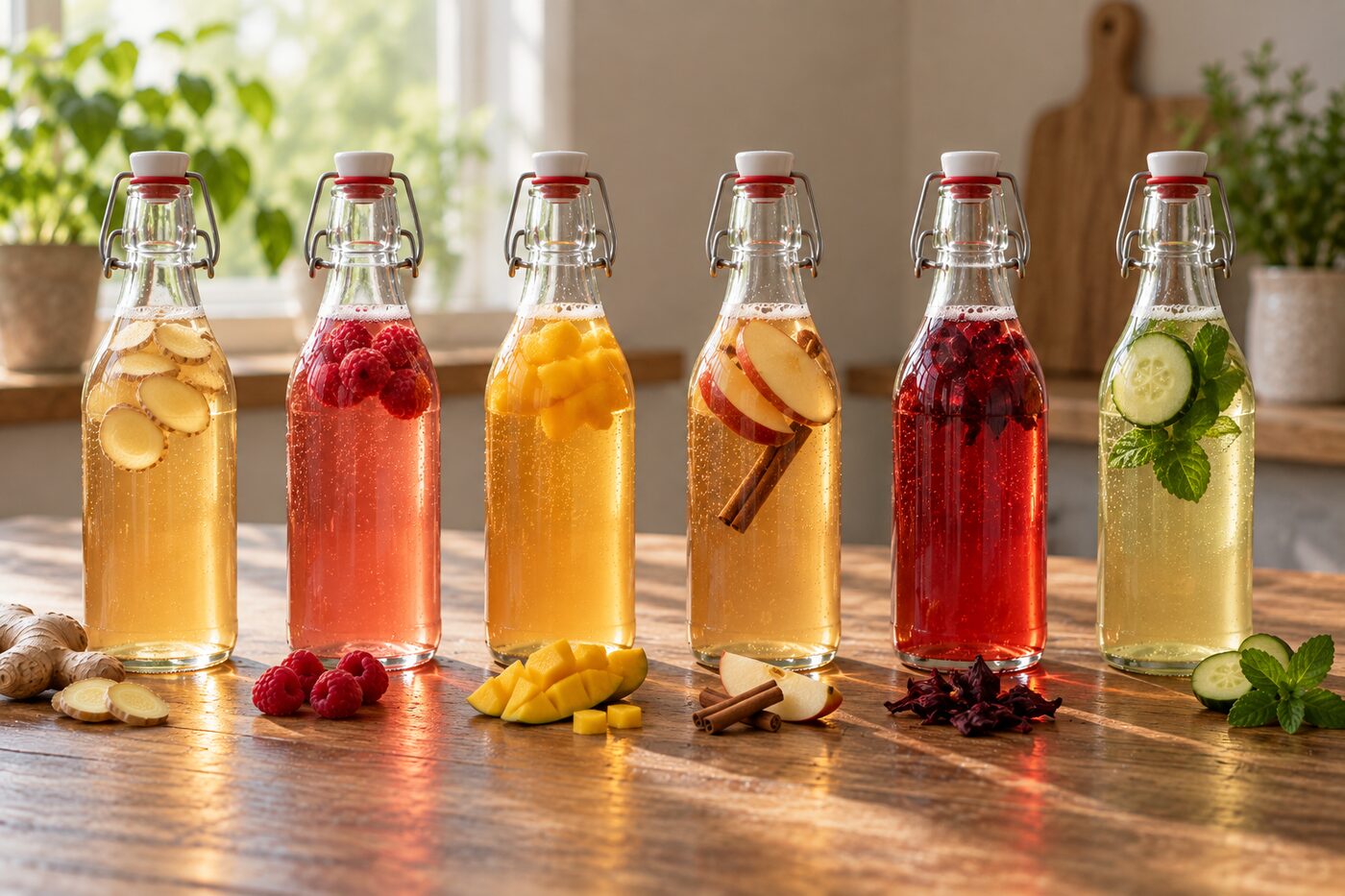
Ginger is the most searched kombucha flavor for a reason: it tastes right with the tea’s tartness and it carbonates quickly, because fresh ginger carries wild yeasts of its own. A teaspoon of grated fresh ginger per 500 ml is plenty; two makes it hot. Fresh beats dried or powdered, which cloud the bottle and fizz less. Ginger juice from a press works and strains clean. The pairings that never miss: ginger and lemon, ginger and turmeric with a grind of black pepper, ginger and pear, ginger and lime.
20 combinations that work
Amounts are per 500 ml bottle. “Fizz” tells you how much carbonation to expect from the ingredients alone; low-fizz pairs want half a teaspoon of sugar or a splash of juice added.
Spring
- Strawberry and basil: a tablespoon of mashed strawberries and two basil leaves. Medium fizz.
- Rhubarb and vanilla: two tablespoons of stewed rhubarb and a few drops of vanilla. Medium fizz.
- Lemon and elderflower: a teaspoon of lemon juice and a teaspoon of elderflower cordial. Medium fizz.
- Pineapple and mint: a tablespoon of crushed pineapple and three mint leaves. High fizz.
- Apricot and thyme: a tablespoon of mashed apricot and a sprig of thyme. Medium fizz.
Summer
- Raspberry and lime: a tablespoon of raspberries and half a teaspoon of lime juice. High fizz.
- Mango and chili: a tablespoon of mashed mango and a thin slice of fresh chili. High fizz.
- Watermelon and mint: 60 ml of watermelon juice and three mint leaves. Medium fizz.
- Peach and ginger: a tablespoon of mashed peach and half a teaspoon of grated ginger. High fizz.
- Cucumber and lemon: three thin slices of cucumber and a teaspoon of lemon juice, plus half a teaspoon of sugar. Low fizz.
Autumn
- Apple and cinnamon: 40 ml of apple juice and a small piece of cinnamon stick. High fizz.
- Pear and cardamom: a tablespoon of mashed pear and two crushed cardamom pods. Medium fizz.
- Grape and rosemary: 40 ml of grape juice and a small sprig of rosemary. High fizz.
- Fig and orange: a tablespoon of mashed fig and a strip of orange zest. Medium fizz.
- Blackberry and sage: a tablespoon of crushed blackberries and one sage leaf. Medium fizz.
Winter
- Blood orange and clove: 40 ml of juice and a single clove. Medium fizz.
- Cranberry and orange: a tablespoon of cranberry sauce or 30 ml of juice and a strip of zest. Medium fizz.
- Ginger and turmeric: a teaspoon of grated ginger and half a teaspoon of grated turmeric. High fizz.
- Pomegranate and mint: 40 ml of pomegranate juice and two mint leaves. Medium fizz.
- Hibiscus and lime: a teaspoon of dried hibiscus flowers and half a teaspoon of lime juice, plus half a teaspoon of sugar. Low fizz, deep red colour.
How long each ingredient needs
Ingredients give up their flavor and sugar at different speeds, and that changes both the taste and the pressure in the bottle. As a rule, test the first bottle a day earlier than you think you need to.
- Fresh ginger and grated turmeric: one to two days. Fast and lively; check on day one in summer.
- Berries and soft fruit: two to three days. Mash them so the sugar is available; whole berries take longer and fizz less.
- Juice: one to two days, because the sugar is already dissolved.
- Citrus juice and zest, herbs: one day is enough for flavor; they add little sugar, so the fizz comes from whatever you paired them with.
- Dried fruit and whole spices: three to five days. Slow to release, deeper in flavor, gentle in fizz.
- Hard fruit such as apple or pear: two to four days, and much faster as juice than as pieces.
If a combination is consistently flat, add half a teaspoon of sugar or a splash of grape or apple juice; if it gushes, halve the fruit and shorten the time. Adjust one thing at a time, and keep a note, because the same recipe behaves differently in July and in January.
Herbs, spices and flowers
Herbs and spices bring almost no sugar, so they flavor without fizzing; pair them with fruit or add half a teaspoon of sugar. A few leaves or a small sprig is enough for 500 ml, and a day is enough for the flavor to come through; longer turns grassy. Whole spices beat ground: a piece of cinnamon stick, a clove, crushed cardamom, a slice of vanilla pod. Flowers are strong: a pinch of lavender or rose is plenty, and a spoonful tastes like soap. Hibiscus is the exception, generous with colour and tartness rather than perfume.
What to avoid
- Essential oils and flavor extracts made with oils. They coat the culture in the bottle and float as a film. Use zest, juice or the whole ingredient instead.
- Juice with preservatives. Sorbate and benzoate on the label stop the yeasts, so the bottle stays flat. Plain juice, fresh or pasteurized, is fine.
- Too much sugar or too much fruit. It is the main cause of gushing and burst bottles; halve the amount before you try anything else.
- Dairy, cream, and anything fatty. It does not ferment well and spoils.
- Anything you would not eat raw. If it needs cooking to be safe, it needs cooking before it goes in the bottle.
- Raw honey in a bottle for a baby or toddler. Its rare botulism risk has nothing to do with kombucha; an infant’s gut cannot yet handle the spores, whatever the drink’s acidity.
Method and timing
Put the flavoring in the bottle, pour the kombucha over it, leaving 2 to 3 cm of headspace, and seal. Or infuse a whole jug for a day and strain into bottles, which gives clearer kombucha and even fizz. Leave the bottles at room temperature for one to three days, check one, then refrigerate for at least 12 hours before opening. Strain fruit and herbs out as you pour, or drink around them.
Flavor only after the first fermentation has acidified properly. Wash fruit and herbs, and check that the finished flavored drink remains below pH 4.2; added juice can change its pH. Use clean, pressure-safe bottles, keep the sealed fermentation short, then refrigerate.
Frequently asked questions
Fresh or frozen fruit?
Either. Frozen fruit is often riper, and freezing breaks the cells so it releases juice and sugar faster. Thaw and mash it before it goes in the bottle.
Can I use juice from a carton?
Yes, as long as it has no preservatives. Pasteurized juice ferments fine; the yeasts come from the kombucha, not the juice. Skip anything listing sorbate or benzoate.
Can I add the flavor during the first fermentation?
No. Keep the brewing jar to tea, sugar and starter. Flavor after you have taken the SCOBY and your starter liquid out; how to make kombucha covers the order of operations.
There is a slimy blob on the fruit in my bottle. Is it safe?
A small, smooth, wet blob can be a new pellicle and may be strained out. Dry or fuzzy growth, unusual color, or an off smell is cause to discard the bottle. Do not taste a bottle to decide whether growth is safe.
How long do flavored bottles keep?
One to three months in the fridge, getting slowly more sour and fizzy. Fruit-heavy bottles are best within a few weeks. How long kombucha lasts has the details.
Can I reuse the fruit for a second bottle?
Not usefully. After a few days in kombucha the fruit has given up its sugar and most of its flavor, and it is soft and sour. Compost it and start fresh.
Should the base kombucha be sweet or sour before flavoring?
A little sweetness can help carbonation, but very sour kombucha may still contain sugar. Taste the first fermentation, use measured flavoring, and check bottles early so pressure does not build too far.
Sources
The guidance above draws on these references. Health and safety points are conservative on purpose: home brewing has real variability, and no article can check your batch for you.
These guides were drafted with AI assistance and reviewed by a hobby home kombucha brewer.
- Colorado State University Extension: Understanding and Making Kombucha
- Homestead and Chill: Kombucha carbonation tips, how to bottle, flavor and second ferment
- Craft a Brew: Kombucha bottle bombs explained
- Kombucha Kamp: Bottling kombucha without explosions, geysers or blowouts
- BC Centre for Disease Control: Safety of Fermented Foods, section 3.11 Kombucha and Jun (2024)