In short
Second fermentation (F2) means bottling finished kombucha in sealed, pressure-safe bottles with a little extra sugar, usually from fruit or juice, and leaving it at room temperature for one to five days. The yeast eats the new sugar, the carbon dioxide has nowhere to go, and it dissolves into the drink. Then you chill it.
For a 500 ml bottle: 30 to 60 ml of juice, or a tablespoon of chopped fruit, or up to a teaspoon of sugar. Leave 2 to 3 cm of headspace, test one bottle on day 2, and refrigerate when it fizzes the way you like.
How the second fermentation works
During the first fermentation the jar is covered with cloth, so the carbon dioxide the yeast produces simply escapes. The second fermentation traps it. You pour the finished kombucha into bottles, add a small amount of fresh sugar, seal them, and leave them at room temperature. The yeast keeps working, the gas builds pressure, and under pressure it dissolves into the liquid. Open the bottle and it comes back out as bubbles.
The sealed bottle changes the balance of the culture. The acetic acid bacteria need oxygen, so they slow right down; the yeast does not, so it does most of the work. That is why F2 adds fizz and a little alcohol but only a little extra sourness, and why the sugar you add is partly, not completely, used up.
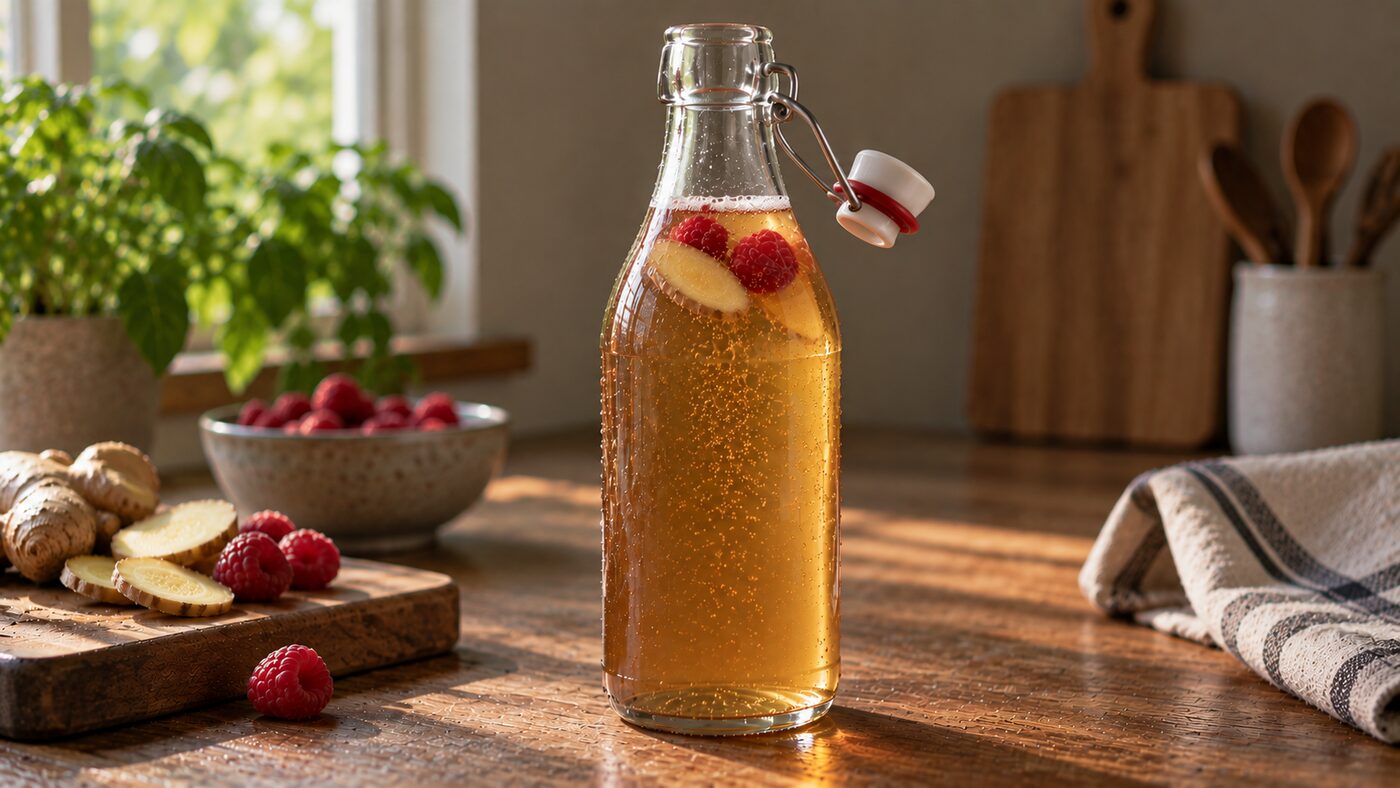
When is kombucha ready to bottle?
Bottle when the first fermentation tastes balanced, or even a touch sweeter than you would like to drink, because the second fermentation eats some of that sweetness. Very sour kombucha may still contain fermentable sugar, but its sharp flavor can overwhelm the fruit you add. How long to ferment kombucha explains how to hit that point.
Before you pour anything, set aside the SCOBY and 10 to 20 percent of the liquid as starter for the next batch. Everything else can be bottled.
The right bottles
- Swing-top (flip-top) glass bottles made for carbonated drinks are the standard choice: thick, round, with a replaceable rubber gasket.
- Clean, pressure-rated commercial kombucha bottles can be reused if their closures still seal. Reuse pry-off beer bottles only with new crown caps and a capper; do not reuse removed caps.
- Avoid square or decorative bottles, thin glass, jars with screw lids, and anything sealed with a cork. Pressure builds unevenly in corners and weak points.
- A plastic PET soda bottle is not pretty, but it is a useful test bottle: when it turns rock hard, the glass ones are ready too.
Leave 2 to 3 cm of headspace at the top. Fill every bottle to the same level so they carbonate at the same pace, and label them with the flavor and the date so you know what worked.
Wash the bottles in hot, soapy water and rinse them well; a dishwasher is fine. They do not need to be sterile, because the kombucha itself is acidic, but they do need to be clean and dry, and the gaskets should be checked for cracks every time.
Flavoring: how much to add
The rule of thumb is 5 to 10 percent juice by volume, or about a tablespoon of fruit per 500 ml. Sugar is what makes bubbles, so sweet fruit and juice carbonate on their own, while herbs and citrus need a little help.
| Flavor | Per 500 ml bottle | What to expect |
|---|---|---|
| Fresh ginger, grated | 1 teaspoon | Fast, lively fizz. Ginger is the classic for a reason. |
| Fruit juice | 30–60 ml | Fizz depends on how sweet the juice is. Grape and apple are reliable. |
| Fresh or frozen fruit, mashed | 1–2 tablespoons | Carbonates well. Strain before drinking. |
| Dried fruit | 1 teaspoon, chopped | Slow, gentle fizz and a deeper flavor. |
| Herbs (mint, basil, rosemary) | A few leaves | Almost no sugar. Pair with fruit or half a teaspoon of sugar. |
| Citrus juice or zest | 1–2 teaspoons | Bright but low in sugar. Add a little fruit or sugar for fizz. |
| Plain sugar | ½–1 teaspoon | The most predictable carbonation, with no flavor change. |
Put the flavoring in the bottle first, then pour the kombucha over it and seal. Alternatively, mix the flavor into a jug of kombucha, let it sit for a day, then strain into bottles: that gives a clearer drink and more even fizz across bottles. Ginger and berries are the easiest place to start, and kombucha flavors lists twenty combinations by season.
A few combinations to start with
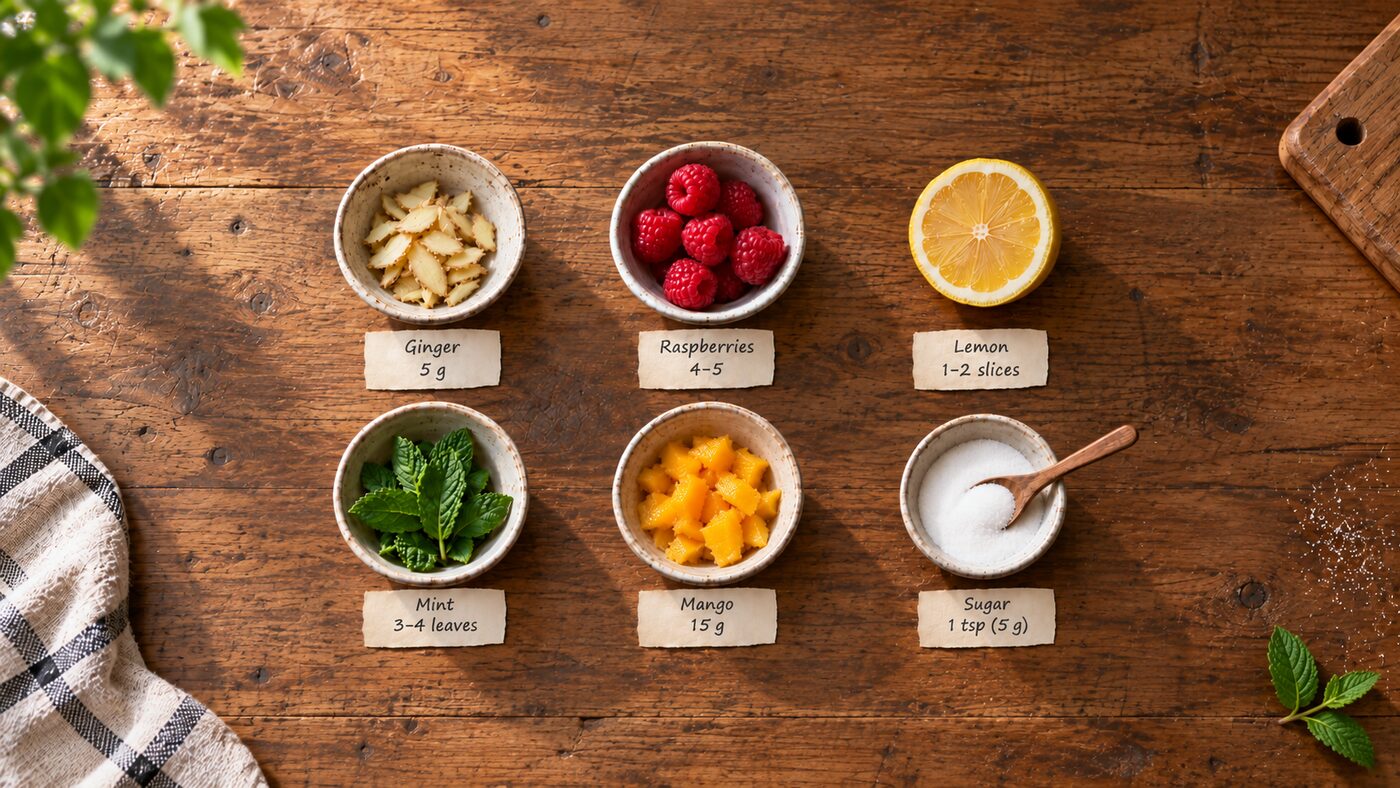
- Ginger and lemon: a teaspoon of grated ginger and a teaspoon of lemon juice.
- Raspberry and mint: a tablespoon of mashed raspberries and three or four mint leaves.
- Mango and lime: a tablespoon of mashed mango and half a teaspoon of lime juice.
- Apple and cinnamon: 40 ml of apple juice and a small piece of cinnamon stick.
- Blueberry and lavender: a tablespoon of crushed blueberries and a small pinch of dried lavender, no more.
How long to leave it
One to three days at 22 to 26 °C (72 to 79 °F) is typical. In a cool room it can take five to seven days; in a hot one, 24 hours. Check daily from day 2: squeeze the plastic test bottle, or open one glass bottle over the sink. When it hisses and fizzes the way you like, move all the bottles to the fridge.
Chill for at least 12 to 24 hours before opening. Cold liquid holds carbon dioxide far better, so a cold bottle opens with a gentle hiss instead of a geyser, and the fizz stays in the glass. Fermentation continues very slowly in the fridge, so bottles get a little sharper and fizzier over the following weeks.
Why is my kombucha flat?
- Too little fermentable sugar remained at bottling. Bottle a little earlier next time, or add a measured amount of sugar, bearing in mind that even sour kombucha can contain residual sugar.
- Very little active yeast reached the bottles. Yeast also lives in the liquid, so visible brown strands are not required; avoid filtering the drink so finely that you remove the live culture.
- The bottles do not seal. Worn gaskets and reused caps leak. Replace the gaskets.
- Too cold. Below 20 °C (68 °F) the yeast is sluggish. Move the bottles somewhere warmer.
- Too little time. Give it another day or two before deciding.
- Too much headspace, or burping too often. Every time you open a bottle, the pressure you were building escapes.
- The sweetener was not fermentable. Sugar-free or artificial sweeteners make no bubbles.
The quickest fix for a chronically flat brew is a pinch of sugar and a spoonful of yeast sediment from the brewing jar in each bottle, then a warmer spot.
Too much fizz, or an exploding bottle
- Too much sugar or fruit. Halve the amount next time.
- Too warm or too long. In summer, a day may be plenty.
- Fruit with wild yeast or a lot of sugar, like ginger, grapes or mango, ferments faster than you expect.
- Bottles that went back to room temperature after chilling, for example in a bag on a warm day.
If a bottle is very hard or hisses loudly when you crack the lid, put the whole batch in the fridge immediately and open the bottles cold, over the sink. Next time, use less sugar and check earlier. Burping the bottles daily works too, but it also lets the fizz out, so it is better to correct the recipe than to babysit it.
A note on alcohol
Sealed fermentation raises the alcohol. Commercial kombucha in the United States must stay under 0.5 percent alcohol by volume to be sold as non-alcoholic, and regulators note that fermentation can continue in the bottle. Home brews commonly land between 0.5 and 2 percent, and more sugar, warmth and time in a sealed bottle push it higher. A Canadian survey of 84 commercial products labelled non-alcoholic found an average of 0.77 percent and a maximum of 3.6 percent; home batches vary at least as much.
In practice: keep the added sugar modest, keep F2 short, and chill. And treat home-brewed kombucha as a drink that contains some alcohol when it comes to children, pregnancy, driving, or anyone avoiding alcohol. Does kombucha have alcohol? goes into the numbers.
Frequently asked questions
Do I have to do a second fermentation?
No. Kombucha straight from the jar, chilled, is finished kombucha. It will be still or very lightly fizzy. The second fermentation is only for carbonation and flavor.
Should I burp the bottles?
Not routinely. If you add a modest amount of sugar and check a test bottle, burping is unnecessary and it lets carbonation escape. Burp only if a bottle feels dangerously hard.
Can I add the fruit during the first fermentation?
Better not. Fruit acids, oils and wild yeasts can unbalance the culture and stick to the SCOBY. Flavor after you have removed the SCOBY and set aside your starter.
How long does bottled kombucha keep in the fridge?
Weeks, and usually months. It slowly gets more sour and more fizzy. A small, jelly-like blob may form in the bottle: that is a new pellicle, and it is harmless. Strain it out or drink around it.
Why is there a blob in my bottle?
A tiny SCOBY forming from the culture in the liquid. It is normal in any raw kombucha, including commercial bottles.
Can I carbonate with CO₂ instead?
Yes. Homebrewers with a keg and a CO₂ cylinder can force-carbonate finished kombucha. It gives the same fizz every time, without added sugar and without the alcohol rising, but it needs equipment most kitchens do not have.
Sources
The guidance above draws on these references. Health and safety points are conservative on purpose: home brewing has real variability, and no article can check your batch for you.
These guides were drafted with AI assistance and reviewed by a hobby home kombucha brewer.
- Alcohol and Tobacco Tax and Trade Bureau (TTB): Kombucha information and resources
- BC Centre for Disease Control: Safety of Fermented Foods, section 3.11 Kombucha and Jun (2024)
- Ethanol concentration of kombucha teas in British Columbia, Canada (2021). Journal of Food Protection
- Craft a Brew: Kombucha bottle bombs explained
- Kombucha Kamp: Bottling kombucha without explosions, geysers or blowouts