In short
Bottled home brew keeps for one to three months in the fridge and gets slightly more sour, fizzier and a touch more alcoholic as it does; raw commercial kombucha behaves the same, and pasteurized kombucha keeps for months unopened. Opened bottles are best within a few days, as the fizz fades. Never store raw kombucha at room temperature once it is bottled.
A batch left in the jar can become strong starter if it keeps acidifying and stays free of mold or off smells. Check it before reuse. A spare culture keeps for months in a SCOBY hotel at room temperature.
Bottled kombucha
Once bottled and chilled, kombucha keeps changing, just slowly. In the first week the fizz peaks and the flavor is at its best. Over the following weeks the remaining sugar keeps turning into acid and a little alcohol, so the drink gets sharper, fizzier and less sweet, and a small, jelly-like pellicle often forms in the bottle. None of that is spoilage. The fridge does not stop the culture; it slows it, and it makes the liquid hold its carbon dioxide, which is why cold bottles open with a hiss instead of a fountain. Regulators note that the alcohol in raw kombucha can keep rising in the bottle even when refrigerated, which is one more reason to drink home brew within weeks rather than months. Does kombucha have alcohol? has the numbers.
| Kombucha | Where | Keeps | What changes |
|---|---|---|---|
| Home brew, bottled | Fridge | 1–3 months | More sour and fizzy over time; a pellicle may form |
| Home brew, bottled | Room temperature | Days | Pressure builds fast; alcohol rises. Only for the second fermentation, then chill |
| Commercial, raw, unopened | Fridge | To the date on the label, often weeks beyond | Same slow souring; fizz builds |
| Commercial, pasteurized, unopened | Cupboard or fridge | Months | Very little; no live culture |
| Any bottle, opened | Fridge, capped | A few days for best fizz, a week or two for taste | Carbonation escapes; flavor flattens |
Home brew varies more than commercial kombucha because its acidity and yeast load vary: a batch bottled young and sweet keeps building pressure for weeks, while a properly sour one changes very slowly in the fridge. That is the practical reason to bottle on the tart side of balance if you plan to store rather than drink straight away, and to open young bottles with care.
Very long storage tells a slightly different story. A 2021 study that kept black-tea kombucha refrigerated for nine months found the pH actually crept up, from 2.82 to 3.16, as the sharpest acids mellowed, while a separate 120-day trial on a green-tea batch found its acidity and pH barely moved at all. What does fade on that timeline is the antioxidant content, dropping off noticeably after about four months. These studies cannot establish that every old home-brewed bottle is safe. Follow storage guidance and discard a bottle if its brewing or storage history is uncertain.
Flavored versus plain
Plain kombucha is the better keeper. Fruit in the bottle keeps feeding the yeasts, so flavored bottles get fizzier faster and can over-pressurise if they sit for months; soft fruit also breaks down and turns cloudy and slimy after a few weeks. Strain the fruit out when the fizz is right and the bottle keeps like a plain one. Juice-flavored bottles sit in between. If you want to store kombucha for the long haul, store it plain and flavor a bottle or two at a time.
Commercial best-by dates are conservative for raw kombucha: unopened and refrigerated, it is usually fine for weeks past the date, just fizzier and sharper. The date matters more for pasteurized kombucha, where flavor fades rather than ferments, and for anything already opened.
Taking it with you
Kombucha travels well cold and badly warm. For a picnic or a gift, take bottles straight from the fridge in a cool bag, keep them upright, and warn the person opening them to do it over a sink. A bottle that has spent a day in a hot car or a warm bag has carried on fermenting under pressure; chill it again before opening. Airline cabins and checked luggage are a gamble with swing-tops; if you must, use plastic bottles half full and expect them flat on arrival.
A batch left in the jar
If life gets in the way and a batch sits under its cloth for weeks, it is not lost. It becomes very sour, essentially kombucha vinegar, and that is the best starter liquid and hotel liquid you can have. Keep the cloth on the whole time; the pellicle will have grown thick and the yeast strands long, and both are normal. Check the surface for anything dry and fuzzy, then use it to start the next batch with a generous 20 percent, or dilute it with juice or sparkling water if you want to drink it. How long to ferment kombucha covers what happens at the sour end.
Spare cultures
A SCOBY keeps for months in a jar of finished kombucha at room temperature, covered with cloth and fed with a little sweet tea every four to six weeks. Room temperature is the usual choice for an active SCOBY hotel. Refrigeration slows the culture; a chilled culture may take longer to restart, so test it in a small batch before relying on it. For a break of a year or more, keep two hotels in separate jars, so one accident does not cost you the culture, and feed each when you can. What a SCOBY is explains the hotel in detail.
When to throw kombucha out
- Dry, fuzzy, round spots on the surface of a jar, or fuzzy growth on fruit sitting above the liquid in a bottle: mold. Everything goes.
- Larvae or flies in the jar.
- A rotten, musty or mouldy smell, as opposed to a sharp vinegar one.
- A bottle that has been sitting warm for weeks. Chill it before you even think about opening it, then open it over the sink; if it is very hard or hisses violently, it may be safer to discard than to open.
- Kombucha that tastes purely of vinegar. Not dangerous, but not a drink; use it as starter or pour it away.
Everything else is normal: sediment at the bottom, strands of yeast, a pellicle in the bottle, a cloudy look, and a drink that is sharper than it was last week. If you are unsure whether a bottle is safe to open, the answer is cold and slow: chill it overnight, then ease the seal open a little at a time over the sink.
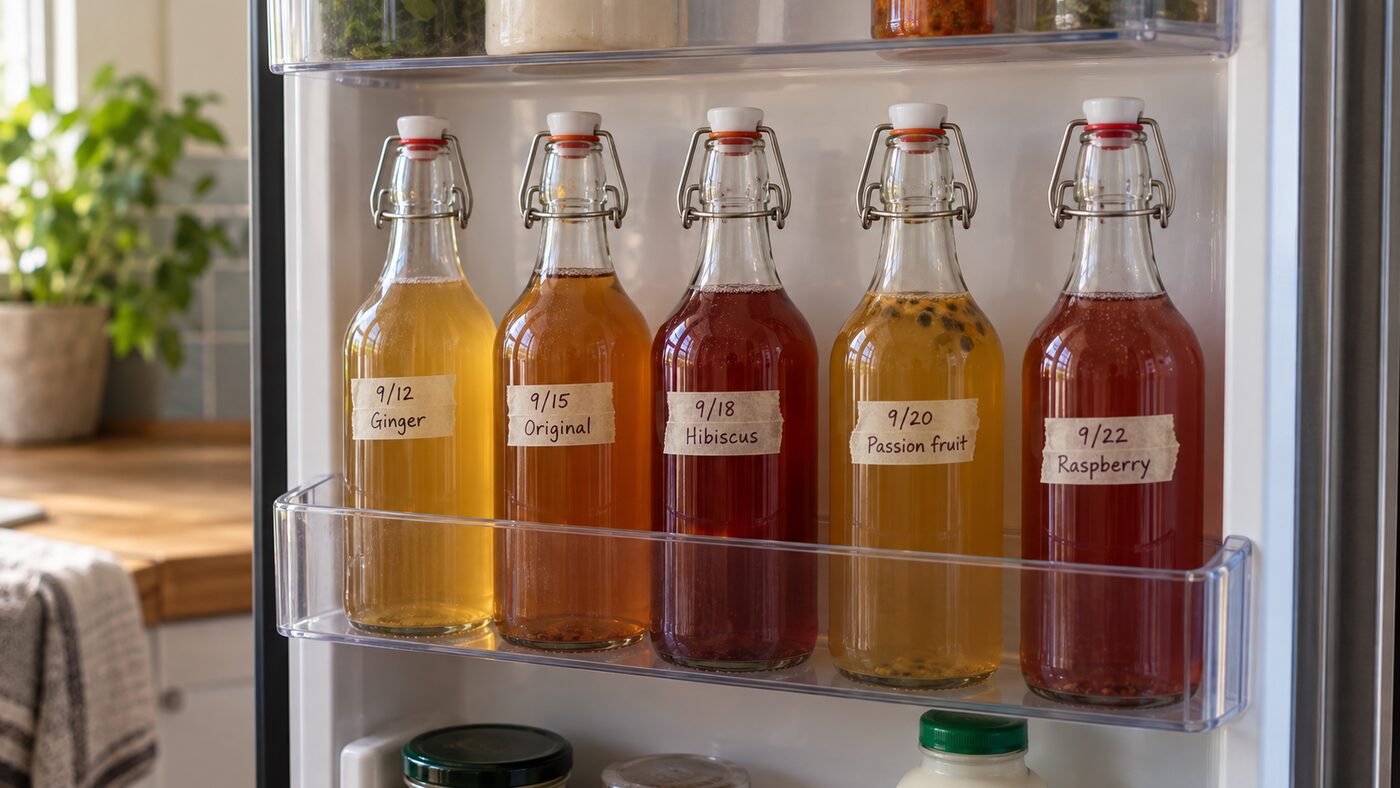
Storage tips
- Refrigerate as soon as the second fermentation is where you want it. Cold holds the fizz and slows everything else.
- Keep bottles upright and sealed. A tight cap keeps carbonation for weeks; a loose one loses it in a day.
- Open bottles cold, over the sink, and do not shake them.
- Label with the date and flavor. After a month, all bottles look alike.
- Do not freeze kombucha. Ice expands and can crack the bottle, and thawed kombucha is flat.
- Store only kombucha that fermented properly: sour, from a healthy jar. Storage cannot fix a batch that started wrong.
- Keep the fridge at 4 °C or below. A fridge door that runs warm gives you fizzier, sharper bottles sooner.
- Drink oldest first. Rotate bottles the way a shop does, so nothing quietly turns into vinegar at the back.
Frequently asked questions
Can kombucha go bad?
Rarely in the fridge, because its acidity keeps spoilage bacteria out. What it does is keep fermenting: more sour, more fizz, a little more alcohol. It goes bad the way any food does only if something fuzzy grows on it or it smells rotten.
I found a bottle from six months ago in the fridge. Can I drink it?
Do not assume a six-month-old home brew is safe just because it is sealed and has no visible mold. Its acidity, alcohol, and pressure may have changed. If you do not know how it was brewed and stored, discard it; never use an uncertain bottle as starter.
Why does my kombucha taste different after a month?
Because the culture is still alive and eating. The sugar that was left has become acid, so the drink is sharper, and the trapped gas has built up, so it is fizzier. That is expected, not a fault.
Is the sediment at the bottom safe?
Yes. It is yeast that has settled out, the same brown strands you see in the jar. Pour gently to leave it behind, or drink it; it is harmless either way.
Can I store kombucha in plastic bottles?
For the second fermentation, a PET soda bottle is a useful test bottle. For weeks of storage, glass is better: it does not absorb flavors or let gas seep out, and it is easier to clean properly.
How long can a chilled bottle stay out of the fridge?
An afternoon is fine. Over a day or more at room temperature it starts fermenting again, builds pressure and gains alcohol; chill it before opening. Do not leave bottles in a warm car or in the sun.
What can I do with kombucha that is too sour to drink?
Use it as starter liquid or hotel liquid, where its acidity is an asset. It also works diluted with juice or sparkling water, and in the kitchen wherever you would use a mild vinegar, in dressings or marinades.
Sources
The guidance above draws on these references. Health and safety points are conservative on purpose: home brewing has real variability, and no article can check your batch for you.
These guides were drafted with AI assistance and reviewed by a hobby home kombucha brewer.
- BC Centre for Disease Control: Safety of Fermented Foods, section 3.11 Kombucha and Jun (2024)
- Alcohol and Tobacco Tax and Trade Bureau (TTB): Kombucha information and resources
- Colorado State University Extension: Understanding and Making Kombucha
- Kombucha Kamp: Kombucha mold information and pictures
- Effects of Long-Term Storage on Radical Scavenging Properties and Phenolic Content of Kombucha from Black Tea (2021). Molecules