In short
The sugar, caffeine and calories in a glass of kombucha vary widely by recipe and brand. Fermentation does not remove sugar or caffeine at a predictable rate, and alcohol also contributes calories. Check the nutrition label for a commercial bottle; a home batch needs suitable testing if you need exact numbers.
To brew with less sugar in the glass, start with a reliable recipe, change one ingredient at a time, and keep added juice or sugar at bottling modest. Longer fermentation often reduces sweetness, but taste and time cannot tell you the remaining grams.
Where the sugar goes
A batch starts with about 60 to 70 g of sugar per liter. Yeasts split sucrose into glucose and fructose, then the culture consumes some of those sugars while producing alcohol, acids and gas. A fall in sucrose alone does not mean that most of the total sugar is gone. Measured 14-day batches vary widely, and even a very sour batch can retain sugar. Only a suitable lab test can tell you the grams in your batch.
Commercial products range from 0.2 to 6 g per 100 ml, depending on the recipe and any juice or sugar added for flavor. At home, neither a refractometer reading nor time and taste can tell you the grams of sugar left; acids affect the reading, and cultures vary. How long to ferment kombucha explains how flavor changes over time.
Brewing lower-sugar kombucha
- Ferment to the flavor you want. More time often lowers sweetness, but a 14-day batch is not automatically low in sugar; the amount left depends on the recipe and culture.
- Go easy at bottling. The second fermentation adds sugar back through fruit or juice. Use the low end of the range, half a teaspoon of sugar or 30 ml of juice per 500 ml, or flavor with herbs and citrus, which bring almost none.
- Skip adding sugar at bottling. Drink the first fermentation chilled if you like it still; it avoids fruit or juice additions, but its sugar content still depends on the batch.
- Dilute. Half kombucha, half sparkling water is a common way to drink a sour batch.
- Change the starting sugar cautiously. The culture needs fermentable sugar, and too little can produce a weak ferment. But a modest reduction from this recipe is not automatically unsafe, nor does the culture always consume most of the sugar. Check that each changed batch acidifies normally. Sugar-free sweeteners cannot replace fermentable sugar.
Measuring sugar at home
The honest answer is that you cannot, not accurately. A refractometer or a Brix meter measures how much a liquid bends light, and acids bend it too, so a sour batch reads far sweeter than it is. A hydrometer, the beer brewer’s tool, has the same problem with density. Kombucha test strips for sugar are rough at best. Laboratories use chromatography, which is why commercial labels can quote a number and a kitchen cannot.
At home, time and taste show how a batch is changing, but they cannot give a sugar figure. Sourness can mask sweetness, and the rate of sugar consumption varies with the culture and conditions. If knowing the grams matters for diabetes or another reason, use a tested product with a nutrition label rather than estimating a home batch.
Sugar in the second fermentation
Fruit, juice, or sugar added at bottling can raise the sugar content. A tablespoon of mashed fruit adds about 2 to 4 g, 30 ml of apple or grape juice about 3 g, and half a teaspoon of sugar 2 g, per 500 ml bottle. Some can ferment into alcohol and gas, but the amount remaining varies with the brew and time in the bottle. So a bottle flavored generously can end up with more sugar than the plain kombucha it came from. If sugar is the concern, flavor with citrus, herbs and ginger, which add taste and almost no sugar, and let the fizz come from a short second fermentation of the residual sugar alone. Kombucha flavors marks which combinations carbonate without added sugar.
Caffeine
Caffeine comes mainly from the tea and depends on the leaf, amount and steep. Black, green and white teas overlap in caffeine content. Fermentation may lower it in some cultures, but measurements do not show a dependable percentage drop; one study even measured an increase. If you are caffeine-sensitive, treat home-brewed kombucha as caffeinated rather than assuming a number from the tea color or fermentation time.
The second fermentation does not add caffeine unless you add a caffeinated flavoring. For a more predictable low-caffeine base, blend in decaffeinated tea or use decaffeinated tea and check that your culture still acidifies the batch. Green or white tea and longer fermentation are not reliable caffeine-reduction methods. The best tea for kombucha covers other tea choices.
Some microbes can break down caffeine, and a 2026 study identified a strain that did so effectively. That finding does not tell you what an ordinary home culture will do: other studies measured little change or even an increase. Do not treat fermentation time as a caffeine meter.
Calories
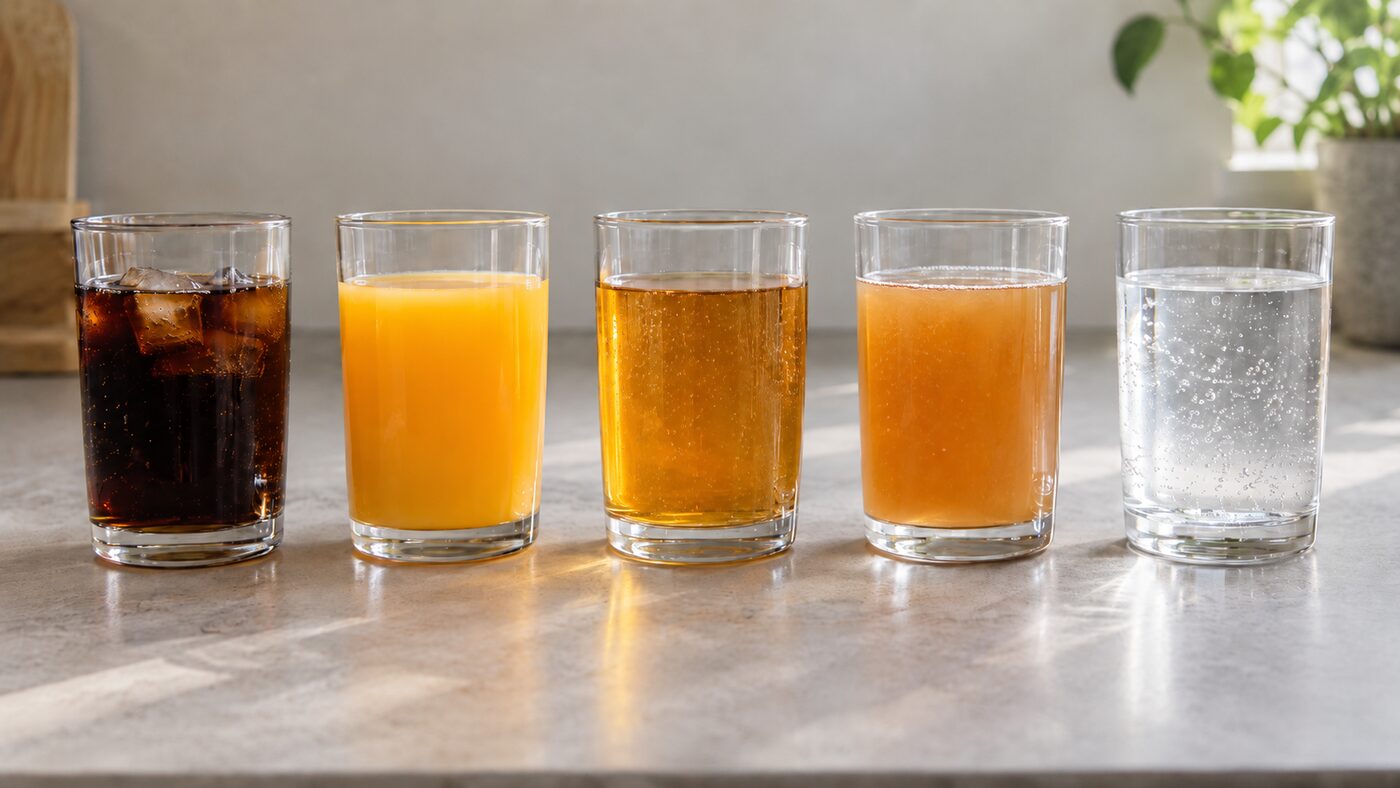
Sugar provides about 4 calories per gram. A commercial label gives the best estimate for that product; a home batch needs testing for a number. Alcohol contributes calories too, so sugar alone does not tell the whole story. For comparison:
| Drink, 240 ml | Sugar | Calories |
|---|---|---|
| Kombucha, commercial | 2–8 g | 15–60 |
| Kombucha, home brew fermented 10–14 days | Varies; test needed | Varies |
| Cola | 26 g | 100 |
| Orange juice | 21 g | 110 |
| Sparkling water | 0 g | 0 |
Reading a label
Check the serving size: some bottles contain more than one serving. On a US nutrition label, residual sugar from the sweet tea may count as added sugar even when nothing was added after fermentation, so “no added sugar” needs careful reading. Total sugar on the label is the useful figure for the bottle you will drink. A home batch has no tested label; its sugar cannot be calculated from the calendar or tartness.
Frequently asked questions
Is kombucha keto or sugar-free?
Not necessarily. Sugar varies by product and batch, and a long ferment does not prove a low carbohydrate count. Check the nutrition label for a packaged drink; home brewers need a suitable test to know the amount.
Does the culture eat all the sugar eventually?
Not reliably. The culture may keep consuming sugar over weeks, but a sour or vinegar-like taste does not prove that the sugar is gone. If you need to know the amount, use a suitable test.
Can I use less sugar in the recipe to make it healthier?
You can try a modest reduction from a reliable starting recipe. Sugar feeds the culture, so change one thing at a time and check that each batch acidifies normally. Less starting sugar may leave less in the drink, but fermentation time alone cannot tell you how much remains.
Does kombucha count toward daily sugar limits?
Yes, like any drink with sugar in it. At 2 to 8 g per glass it is a small contribution compared with juice or soda, but it is not zero.
Is green-tea kombucha caffeine-free?
No. It still contains caffeine unless made with a caffeine-free base. The amount depends on the tea and the brew; green tea is not reliably lower in caffeine than black tea, and fermentation does not reliably remove it.
Is kombucha suitable for people with diabetes?
Sugar varies by brand and home batch. A small pilot trial found lower fasting glucose in adults with type 2 diabetes who drank kombucha, but that does not establish a treatment. Anyone managing blood sugar should count kombucha as a drink that may contain sugar and ask their clinician. Is kombucha good for you? reviews the evidence.
Does SCOBY hotel liquid have sugar in it?
It may still contain sugar. A SCOBY hotel often ferments for weeks or months, but its sourness cannot tell you how much remains. Use healthy, clearly sour hotel liquid as starter rather than assuming it is sugar-free.
Sources
The guidance above draws on these references. Health and safety points are conservative on purpose: home brewing has real variability, and no article can check your batch for you.
These guides were drafted with AI assistance and reviewed by a hobby home kombucha brewer.
- Microbial and chemical profiles of commercial kombucha products (2022). Fermentation
- Fermented tea as a food with functional value: microbiological profile, antioxidant potential and phytochemical composition (2024). Molecules
- Effects of fermentation time and temperature on the physicochemical quality of kombucha (2026). Foods
- Colorado State University Extension: Understanding and Making Kombucha
- Elucidation of caffeine degradation in kombucha by Komagataeibacter saccharivorans KS1 and low-caffeine kombucha production (2026). Food Bioscience